
Revolutionary Servo Press Technology
Experience the future of precision manufacturing with our advanced servo press technology. Unmatched accuracy, flexibility, and efficiency for your production needs.
Advanced Servo Technology
Revolutionizing precision manufacturing with intelligent servo control systems
Ultra-Precision Control
Advanced servo motors provide ±0.01mm positioning accuracy for the most demanding applications.
High-Speed Operation
Optimized servo systems deliver up to 300% faster cycle times compared to traditional presses.
Adaptive Control
Intelligent algorithms automatically adjust parameters for optimal performance across different materials.
Real-Time Monitoring
Comprehensive data collection and analysis for predictive maintenance and quality assurance.
Energy Efficient
Regenerative braking and smart power management reduce energy consumption by up to 40%.
Safety First
Advanced safety systems with redundant sensors and emergency stop capabilities.
Servo Press Gallery
Explore our range of advanced servo press solutions
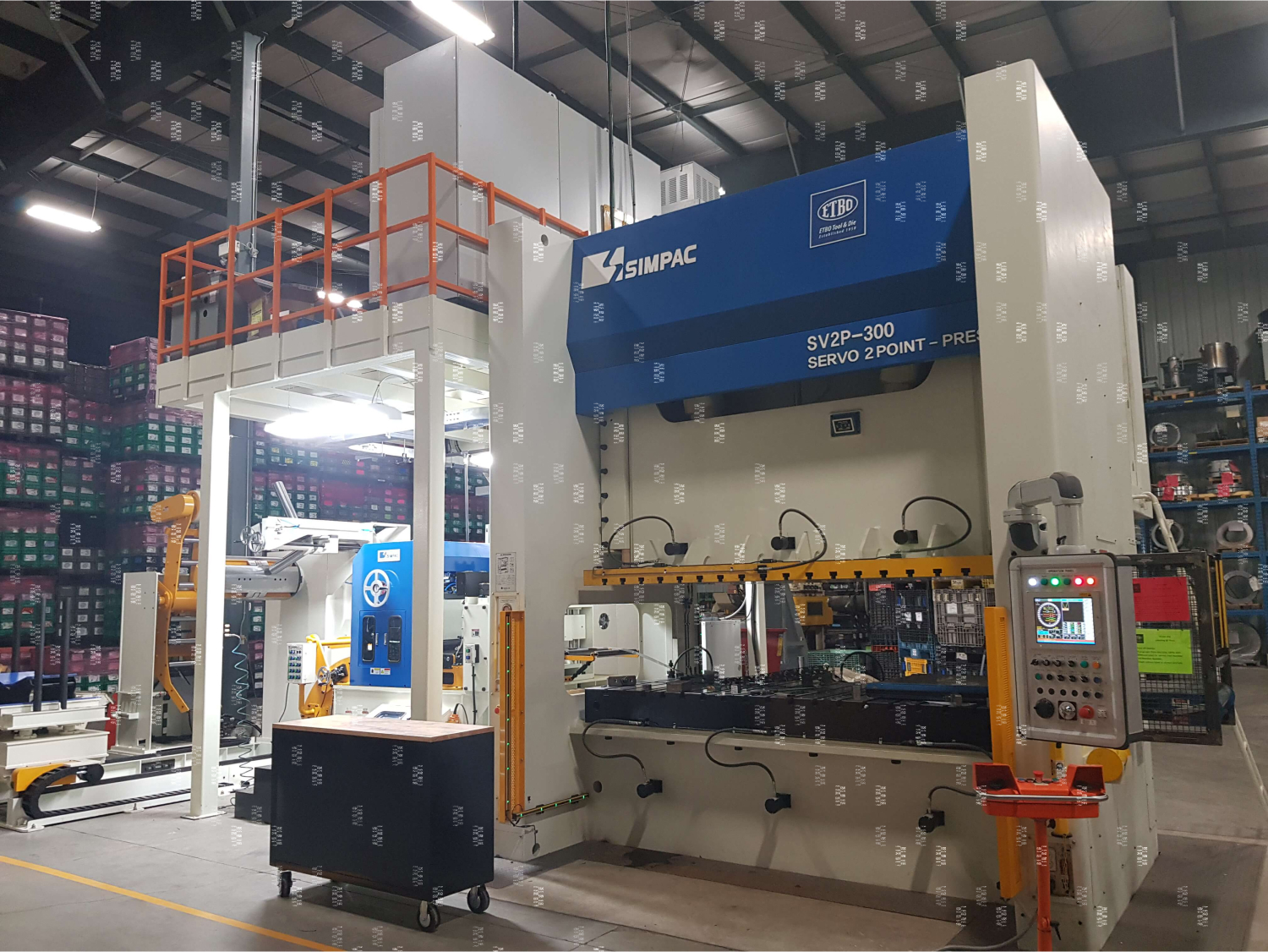
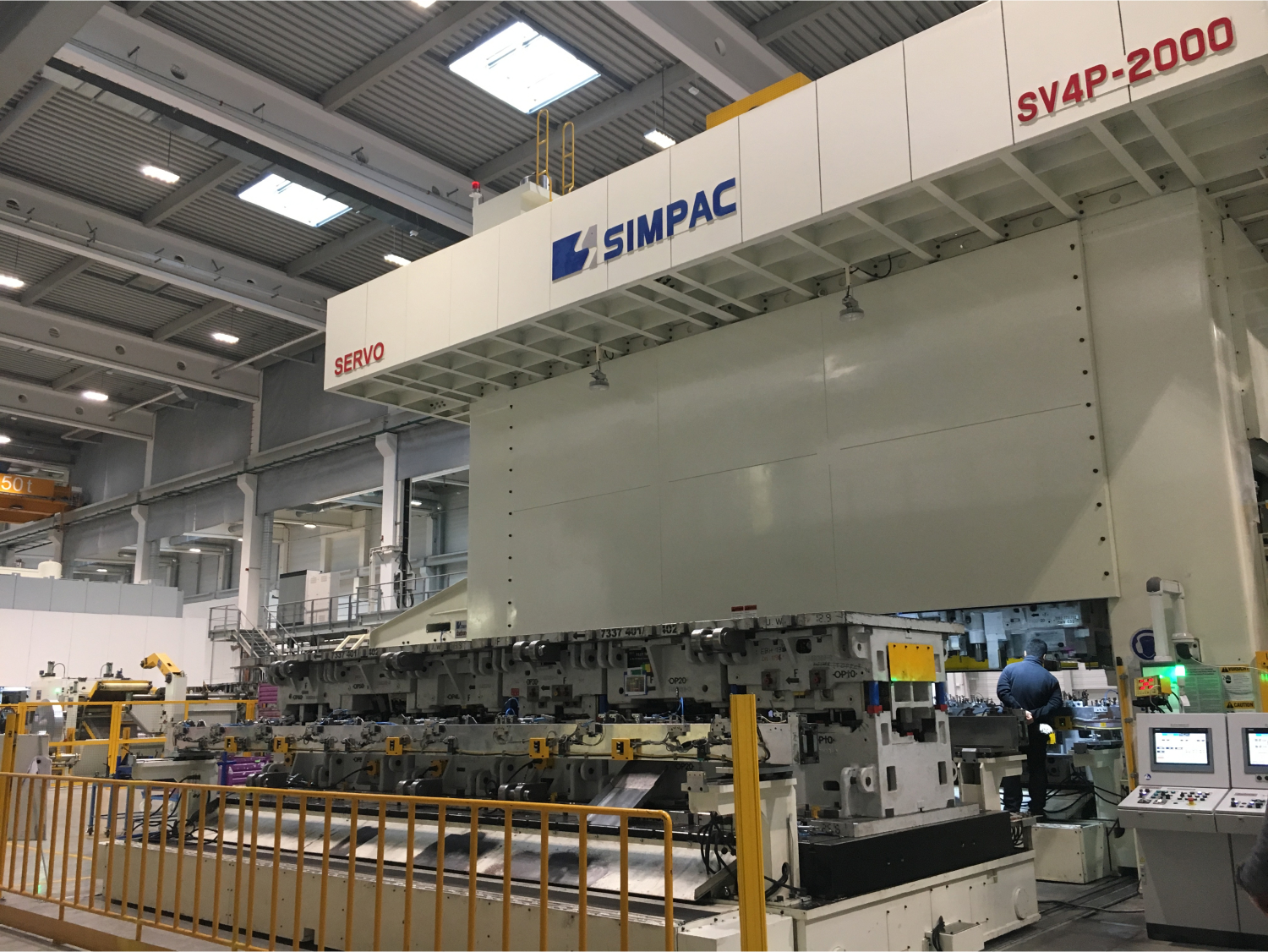
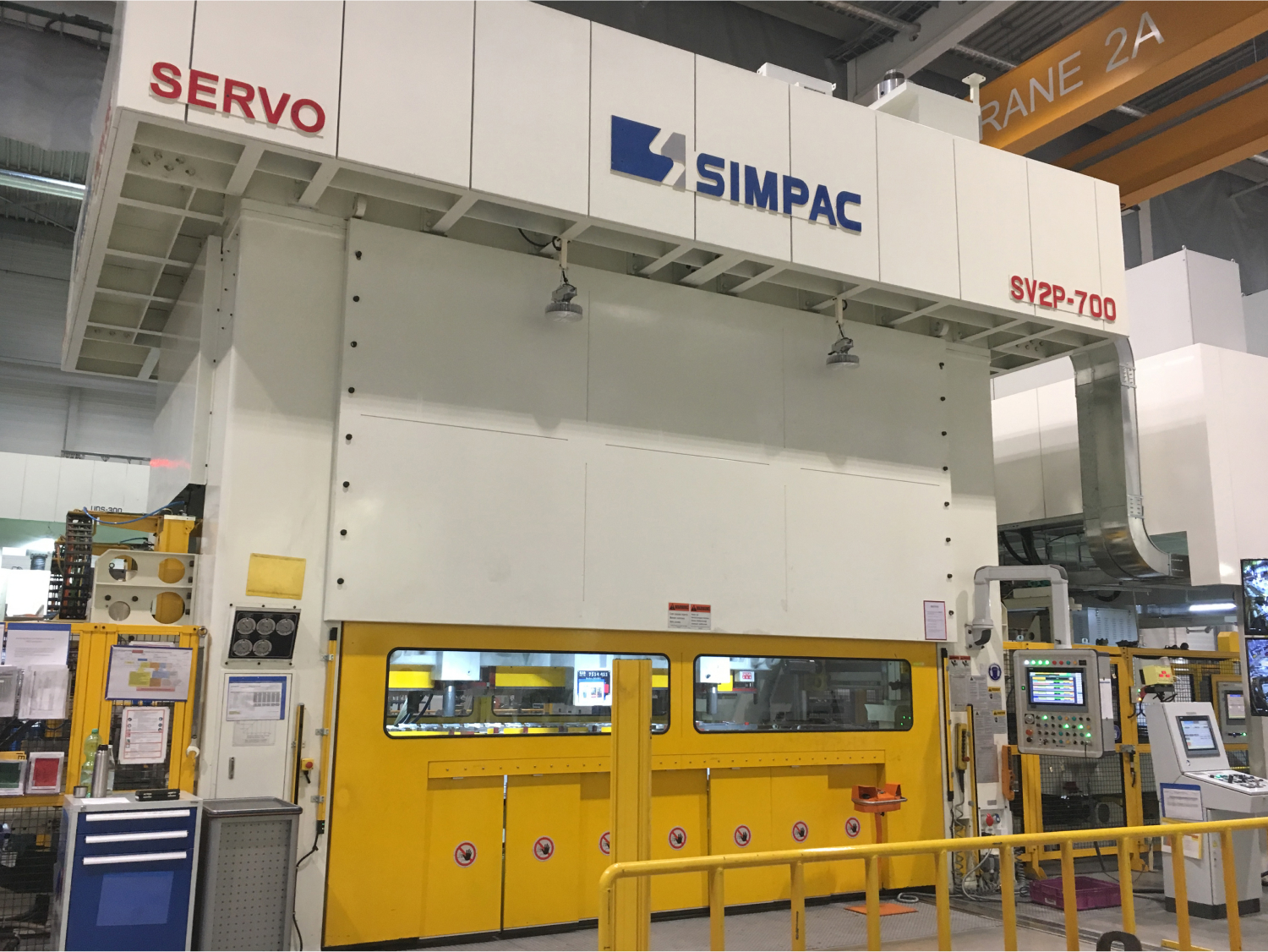
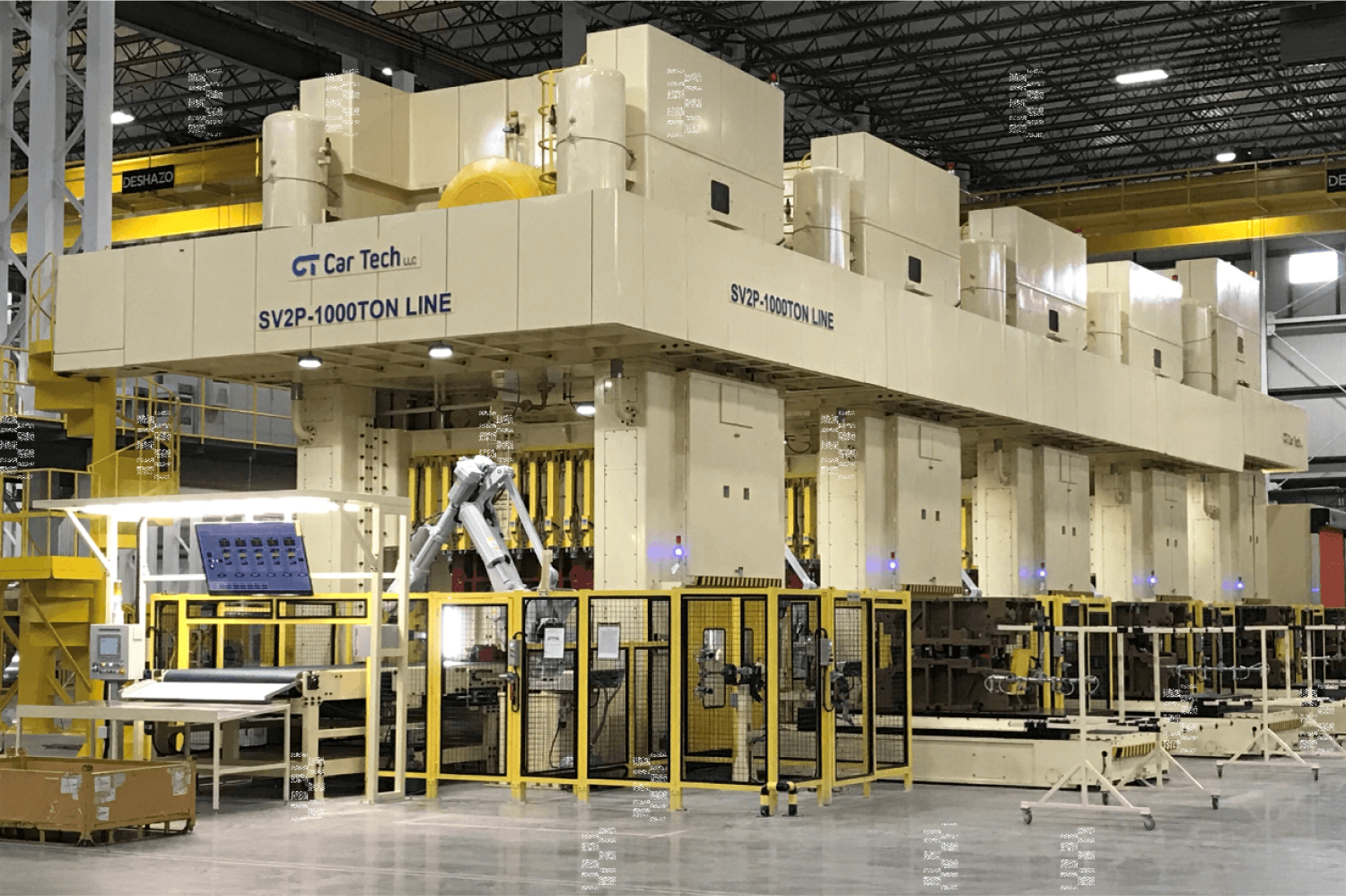
Servo Presses Overview
Advanced servo direct drive technology for highly dynamic forming processes
Type
Servo Presses
Press Capacity
80-3000 tons
Part Size
Medium to Large
Slide Kinematics
Servo Motion
Applications
Cutting, stamping, bending, embossing, drawing & integration of downstream processes
Description
These servo direct drive presses are optimized for highly dynamic forming processes and offer maximum flexibility in production. High-quality parts can be consistently achieved due to the high stiffness value of the press body and drive.
Features & Benefits
Why choose SIMPAC servo presses
Flexible Installation
SIMPAC's product portfolio of servo presses can be installed as single presses in progressive or transfer mode, double press systems for more flexibility, or fully automated press lines.
Compact Design
For servo presses with a press capacity below 600 tons, the compact design will require little floor space and no foundation.
Korean Quality
Motors, power electronics, holding brake, lubrication, and controls are of Korean origin and guarantee a long service life, maximum dynamics, and a supply of spare parts.
High Precision
The slide guiding system ensures a high level of tilting rigidity and reduces the cutting impact when processing high-strength materials.
Safety Protection
Hydraulic overload protection to protect both press and dies.
Advanced Control
Curve generator for individual slide movement profiles and comprehensive press force monitoring.
Standard Equipment
Included with every servo press
Electrical Slide Adjustment
Hydraulic Continuous Slide Locking
Automatic Slide Counterbalancing
Vibration Isolated Installation
Central Circulation Lubrication
Press Force Monitoring
Technical Specifications
Detailed specifications for our servo press series
SVC1 Series
| Model | SVC1-150 | SVC1-200 | SVC1-250 | SVC1-300 |
|---|---|---|---|---|
| Press Capacity | 150 ton | 200 ton | 250 ton | 300 ton |
| Rated Tonnage Point | 6 mm | 6 mm | 6 mm | 6 mm |
| Stroke Rate | 3-110 spm | 3-100 spm | 3-90 spm | 3-90 spm |
| Stroke Length | 200 mm | 250 mm | 250 mm | 250 mm |
| Slide Adjustment | 100 mm | 120 mm | 150 mm | 150 mm |
| Die Height | 430 mm | 480 mm | 500 mm | 550 mm |
| Slide Dimension | 700×550 mm | 1250×650 mm | 1350×750 mm | 1600×900 mm |
| Bolster Dimension | 1250×750 mm | 1400×850 mm | 1500×950 mm | 1800×1000 mm |
Servo Series
| Model | Servo 400T | Servo 600T | Servo 800T |
|---|---|---|---|
| Press Capacity | 400 ton | 600 ton | 800 ton |
| Rated Tonnage Point | 6 mm | 6 mm | 6 mm |
| Stroke Rate | 3-80 spm | 3-70 spm | 3-60 spm |
| Stroke Length | 350 mm | 350 mm | 350 mm |
| Slide Adjustment | 200 mm | 250 mm | 250 mm |
| Die Height | 600 mm | 800 mm | 800 mm |
| Slide Dimension | 3000×1400 mm | 4000×1500 mm | 4000×1500 mm |
| Bolster Dimension | 3000×1400 mm | 4000×1500 mm | 4000×1500 mm |
| Frame Deflection | 1/8000 mm/m | 1/8000 mm/m | 1/8000 mm/m |
| Anti-vibration Device | Spring & Damper | Spring & Damper | Spring & Damper |
| Pit | Necessary | Necessary | Necessary |
SVT2 Series
| Model | SVT2-1000 | SVT2-1200 | SVT2-1500 |
|---|---|---|---|
| Press Capacity | 1000 ton | 1200 ton | 1500 ton |
| Rated Tonnage Point | 6 mm | 6 mm | 6 mm |
| Stroke Rate | 5-30 spm | 5-30 spm | 5-25 spm |
| Stroke Length | 600 mm | 600 mm | 600 mm |
| Slide Adjustment | 600 mm | 600 mm | 600 mm |
| Die Height | 1200 mm | 1200 mm | 1200 mm |
| Slide Dimension | 5100×1800 mm | 5100×1800 mm | 6100×1800 mm |
| Bolster Dimension | 5100×1800 mm | 5100×1800 mm | 6100×1800 mm |
| Frame Deflection | 1/8000 mm/m | 1/8000 mm/m | 1/8000 mm/m |
| Working Height | 700 mm | 700 mm | 700 mm |
SVT4 Series
| Model | SVT4-1500 | SVT4-2000 | SVT4-2500 | SVT4-3000 |
|---|---|---|---|---|
| Press Capacity | 1500 ton | 2000 ton | 2500 ton | 3000 ton |
| Rated Tonnage Point | 6 mm | 6 mm | 6 mm | 6 mm |
| Stroke Rate | 5-25 spm | 5-25 spm | 5-20 spm | 5-18 spm |
| Stroke Length | 700 mm | 700 mm | 700 mm | 700 mm |
| Slide Adjustment | 800 mm | 800 mm | 800 mm | 800 mm |
| Die Height | 1400 mm | 1400 mm | 1400 mm | 1400 mm |
| Slide Dimension | 6100×2500 mm | 6100×2500 mm | 6100×2800 mm | 7200×2500 mm |
| Bolster Dimension | 6100×2500 mm | 6100×2500 mm | 6100×2500 mm | 7200×2500 mm |
| Frame Deflection | 1/8000 mm/m | 1/8000 mm/m | 1/8000 mm/m | 1/8000 mm/m |
| Working Height | 750 mm | 800 mm | 800 mm | 800 mm |
* Depending on programmed stroke length, slide kinematics, part dimension, and existing die limitations
** SDAU = slide stroke down, adjustment up | All models have 2-point design | Subject to technical modifications
Ready to Transform Your Manufacturing?
Discover how our servo press technology can revolutionize your production process